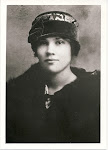
The Letters of Roy J. Diehl (Jay Roy Diehl)

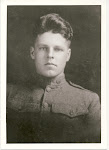
From 1917-1919, Roy J. Diehl, a railroad worker from Pennsylvania, wrote a series of letters to Stella Custer, his future wife, while he was enlisted in the 281st Aero Squadron. Most published letter collections consist of letters penned by men of education, rank, or fame. Roy J. Diehl was neither highly educated, highly ranked, nor famous, but his letters provide an interesting and valuable look at the life of an ordinary enlisted man, untainted by the notion that he may be writing to a wide audience or that anything beyond his relationship with Stella, his future betrothed, rests on what he says. Still, his letters display the usual characteristics of war-time correspondence; Sergeant Diehl omits potentially sensitive information about activities in his Squadron, treats probably disgusting or horrific situations with a certain amount of nonchalance, speaks in cliches of patriotism, and continually thinks of movement and distance.

April 10, 2011

Back Online

Quite obviously, I was not able to post when I promised. Now, however, I have a functioning computer with a USB port, and have been able to catch up.

A few comments about the previous letters:

1) Stars and Stripes, which Roy mentions, is a military newspaper which was founded during the Civil War and is still operational today.

2) Roy mentions creating a picture frame out of a French spad propeller. Such things were done quite often with found objects, particularly, I imagine, when soldiers were just waiting around for orders and didn't have much to do. I wish I knew what has become of the picture frame or if Roy ever finished it... Quite apart from being valuable, Trench Art is just plain interesting.

3) Note that Roy finally received the picture he asked Stella for nearly a year earlier. Nowadays they'd already be fb friends and he would have albums and albums to look through. Imagine waiting so long for just one photo...

March 23, 1919

This letter has an interesting combination of patriotism and self-consciousness. Roy doesn't want the Germans shown any pity and wishes the League of Nations would quit squabbling over terms. Yet, at the same time, Roy recognizes that his criticism largely comes from a strong desire to just go home.

My Dear Friend:

Took a notion to write a letter or two this evening but do not know how many I will get written. I owe four or five letters but am quite sure I shall not get that many written, anyway.

I want to thank you for the North Americans you sent me. Those two were the first real newspapers I read since last August and I sure did read them all through. One had a very good editorial in it and I agree with the man who wrote it. I say get the peace terms made up and bring the Huns to their knees and then discuss the League of Nations. Everyday the Hun gets the more confident he feels and he fakes up such excuses as needing food in order to get the best possible terms from the Allies. I say make them get to work and earn their living and perhaps the fighting and squabbling among themselves will stop. They will soon begin to think the Yanks will be foolish enough to feed the world and the Huns and Bolsheviks free of charge. It looks so to me. I may be all wrong for there are far wiser men than I working to solve such things. You see we boys over here have lots of time to think about such things and of course blame everybody and everything for not getting us home. One thing I believe: that is there are going to be some queer political views when the whole A.E.F. gets home.

A bunch of us were out taking pictures this afternoon and if they turn out good there should be some great pictures. I'll see how they are and if any good will send you one or two. I am hoping they will be good for we were all togged up for some of them and were in some old trenches.

For the past week the weather here has been a little better. The mud was beginning to dry up, but this evening it is raining again. I suppose winter in the States is about over and you should soon be having nice warm weather.

Well, I hope I may soon be able to enjoy some of it with you. I had some hopes that I might be home by May thirtieth and I sure was hoping that you had the right notion when you said you thought I would be home some time in May, and I still hope that you were right but it begins to look doubtful. If there no signs of going home soon I shall make it July Fourth and hope to be home by then.

I cannot think of much to write. There is little or nothing doing around here. I am still driving but have very little to do, so I have not been getting around very much lately. I am hoping that we soon make a move one way or another. For as long as we stay over here we might better be moving about a little. Things get monotonous if we are at one place any length of time, especially a place like this. Briey is only a little town and no place to go, really. No Y.M.C.A. within fifteen miles. No other troops anyways near any more except some Colored Engineer companies.

Think I would better close. Stop this gloomy letter. Ha. Ha! In my spare time I am doing a little work on a picture frame which I am going to send you if you wish to have it--and if I think it is worth sending. Ha. Ha! I am cutting it out of a French spad propellor.

Well, it is almost time for 'lights out' and I see I shall get no more letters written tonight. I'll close this one though.

Most Sincerely,

Roy D.

Sgt Roy J Diehl
281st Aero Sqdn Amer E.F. France

France, March 10, 1919

Two things make this letter particularly interesting. first is the use of pseudonym "pushing up daisies" to mean "dead"--very in keeping with soldiers' general avoidance of directly describing unpleasant thoughts or experiences. Second is Roy's reference to the French women some of the "boys" were bringing back to the States and his avowal that he certainly doesn't see the appeal. One imagines that he hopes to comfort Stella and reassure her of his interest.

My Dear Friend:

Perhaps by the time you receive this letter you will have begun to think that I have forgotten you, started home; or, perhaps you will be thinking I am 'pushing up daisies.' Well certainly I am not pushing up daisies yet, for I am still very much alive. I haven't started home, sorry to say, nor have I forgotten you. I hardly know what kind of an excuse to offer for not writing but I will say that I started four or five letters and finished none of them simply because I was too disgusted with things to write letters. I could have written letters but I know you would not have enjoyed reading it. Not that I feel you are going to enjoy this letter but I will at least try to make it as pleasant as possible.

For one thing: I know I am not getting all of my mail. I got your letter of February 16th and also, I got the picture about two weeks ago, and I surely thank you for it. And you say you are sorry it is so unworthy of the wait. Well, I am not, though it was hard to wait for it. But then it was like you said of coming home, all the more appreciated when we do get it. Ha. Ha!

I have not yet received the papers you mailed nor the conclusion of that story, but have not yet lost hope. Anyway I want to thank you for them now and hope to still receive them. I have now several articles I want you to have, but since the mail seems so uncertain I hate to take a chance. I may send them later. If I do, I will be sure to tell you. If I do not send them I will bring them with me when I come home. If I ever do get home again. Ha. Ha! It surely does not look like getting home for some time, anyway.

Puzzle: What are you girls going to do when there are so many French girls coming home? I believe I could answer that better if I were able to speak to you personally. One thing I know. No one needs worry about me bringing any French girl back to the States, and I do not think much of any ones taste in bringing one back. They have got to be a whole lot nicer than any I have yet seen, before I bring any back. I prefer a girl to whom I can talk or who can talk to me for I am a poor conversationalist. Ha. Ha!

Sorry to hear of Elizabeths illness again but hope she is fully recovered by this time. I am glad to know you received the 'Stars and Stripes.' I sent you three, I think. But we cannot seem to get any up here. We have no Y.M.C.A. anymore. Haven't had any since we came to Briey. I sent you several copies of 'Le Mirrors' which I thought you might perhaps be interested in. Am also going to put several cards in with this letter. I sent some cards home some time ago but I do not think they ever received them for they said nothing about them.

I hope your visit to Claysburg was as enjoyable as the one I remember but wish I could have been there to help entertain you. The rest of the boys in my barracks are talking about a 'hobnail barrage' this evening so I had better close before they start it. When such a thing is pulled off the best thing one can do is get his hands on as many hobnail shoes as he can and get into it. They throw shoes, boots, stools, wash pans and anything they can get hold of. The last one we had we knocked out all the lights, broke up the stove, knocked down the stove pipe and did all sorts of damage! It was fun while it lasted but the next morning there was some scrambling to get our shoes and get out to Reville. You see we must have some sort of amusement sometimes. Ha. Ha!

I'll close. Most Sincerely Yours,

Roy Sgt Roy J. Diehl

281st Aero Sqdn Amer E.F. France

March 24, 2011

Technical Difficulties

Hello, loyal followers. I was due to post a letter mid-March, but, due to the fact that my computer can no longer do much more than heat up my desk, I've been unable to. Luckily, I have found the thumb drive on which I stored a copy of my project, and I will post the letter in the next 24 hours using my dear husband's computer, which functions (mostly).

Katherine

February 3, 2011

France, January 26, 1919

This letter is one of a handful in which Roy discusses politics and expresses an opinion on the events of the war. It's an interesting departure from the usual commentary on weather and everyday life. Of course, the Peace Conference would have meant a great deal to any American but especially to a soldier stuck overseas and far from home.

My Dear Friend:

I want to tell you this evening of our move we made last Tuesday. We left Behonne but instead of moving toward a post, as all had hoped, we came the other way, so now we are up toward Metz. Still in France but only about three miles from the Alsace-Lorraine border near the town of Briey. We are located on an old Bosche flying field and will have, I think, quite a nice place when we get fixed up a little more. There were some buildings here but no sleeping quarters, so we tore down some German hospital barracks and moved them about a mile and set them up again. They are not very large so with two small stoves in them we can keep them fairly warm and when we get bunks made we shall be O.K. As yet we have been sleeping on the floor.

For a mess hall and kitchen we tore down and rebuilt an old building. I understand we are not a part of the Third Army or Army of Occupation so I guess our hopes of getting home early are spoiled. I had figured that if I got home by next Fourth of July I would be lucky but now since we are up here I am beginning to think that if I get back by July Fourth 1920 I shall be lucky. Oh well, as long as we stay over here we have one thing to look forward to, and that is our home coming. Am I right? Ha, Ha!

I suppose you are having plenty of snow and winter weather back there now, are you not? We are having a spell of cold weather now and I hope it keeps it up for I sure was tired of the rain and mud. The ground has been frozen since last Tuesday and this evening it is snowing a little. I suppose we will not be getting any mail up here for a while as it seems when an outfit moves the mail gets tied up for a time. I received the first instalment of the story and read it and am now anxiously awaiting the rest of the story. Oh and also the picture. I have not forgotten that you said you might send me one. So don't forget, please.

How is school going? Have they opened up again? I had a letter from Dad a week or so ago and he told me of the apples and good things to eat. They live on a farm, you know, and I told him he should not write me anything like that anymore as he would make me homesick. Ha. Ha!

We are about a mile and a half from Briey but I have not seen the town in daylight yet but it seems to be like all the other French towns. This part of the country is French but was held by the Germans since 1914. I was down at Briey one evening to see a show. Two y women and a Lieutenant and the 28th Division Band. The 28th division boys are Pennsylvanians. The 110th Infantry was stationed here until a few days before we moved here. The 110th was the 5th Regiment Pennsylvania National Guard. They moved back somewhere and are on their way to port and expect to go home soon.

What does this Peace Conference look like to you now? I remember you did not seem to think much of the U.S. delegates. I have not been getting any papers for a couple of weeks but it seems to me that almost or perhaps altogether as much depends on the present conference as on the outcome of the actual war. I am not much on politics and worse yet I have not been reading much but it seems to me that if ever there was a time for earnest, honest and united action on the part of all Americans it is now. The Germans are licked but they are not over causing trouble by any means. They are playing for sympathy now.

I do not know of much more to write. anyway I think I have scribbled about enough for this evening, so will close.

Most Sincerely yours,

Roy Sgt Roy J. Diehl.

281st Aero Squadron, Amer E.F. France

January 20, 2011

France, Jan. 16, 1919.

This letter displays the desire for movement (in this case toward home) common to many letters written during WWI. Roy good-naturedly comments that the 282nd, the near equivalent to the 281st, has already been home for some time (though they didn't have the opportunity to tour France, as Roy did).

My Dear Friend:

I received your letter of Dec. 3rd a few days ago and the Christmas Card, too. Do you remember the verse on it? Well, anyway I assure you the 'almost' is not at all necessary, see? But the biggest trouble is: that I didn't have any Christmas Tree. I also got the First instalment of 'The Luck of Geraldine Laird' and am now eagerly awaiting the next instalment.

I had a letter from an old chum of mine a few days ago. He has been over here eighteen months and is now up at Cablence and no signs of going home. For that matter, it seems our chances of going home are quite slim, for the present, anyway. We are to move from here in a few days ago but we are moving in the wrong way. They say we are going up Briey, near Metz. The 282nd Squadron has been home some time. They were at Park Field with us and had four or five Altoona boys. I got a card from one of them saying he left England November 29, landed December 12th and was home December 14th. So they are a lucky bunch, are they not? But they never got farther than England. Well, we'll get back some day, I guess. I am still hoping that we may make it by July Fourth or next Christmas at the most. Ha. Ha!

The Flu must be going the rounds a second time, is it? My brother in Gresson had it and was quite ill I guess but is well again, I think.

I had quite an interesting trip yesterday. Was up at St Mihiel, Thiacourt and Mount See. These places were all taken by the Yanks and they certainly are tough looking places. They say the French took Mount See with a loss of 30,000 men but held it for only seventeen minutes. Some time later the Yanks took it and held it, too. It sure is a hard looking nut to crack. I saw a concrete dugout there that they said was the Crown Princes. His headquarters for time. It is a fine looking place for a dug out. Some real paintings on the walls of it. Thiacourt, I think, was one of the first places taken by the Americans in the big St Mihiel drive in September. That was about the time we landed here at this place.

I have been counting on getting my seven day service leave soon but if we move I may not be able to get it, though I hope I can. I wanted to go to Nice. I suppose you have often heard of that place. It is near Monaco and Monte Carlo and with these two places is one of the 'big show' places of all Europe. I would be willing to give up a trip like that though if I thought we would be going home, but fear our move is going to be in the wrong direction to go home.

My letter this evening may be a bit blue but can you blame me after hearing such orders as to get ready to move up instead of back toward good old U.S.A. as we all had hoped?

It is rather chilly in barracks tonight so I think I shall make up my bunk and 'get on the roost soon. Remember, I am still patiently looking for that picture you mentioned. I got myself a little Kodak a few days ago and now if I can get films for it I shall bring a few real pictures of Europe when I return. Films are very hard to get over here, you see the Government was taking all such things that could be made.

I'll close for tonight. My next letter may be written from up the country.

Sincerely yours

Roy Sgt Roy J Diehl 281st Aero Sqdn Amer E.F. France.

December 21, 2010

France Dec. 11, 1918.

Roy anticipates his return to the U.S. in this letter. The boys have been talking about their states (each proud of his own) and wish to return home. Roy shows his own state pride and recalls a banquet he attended over a year ago, back in Roaring Spring PA. Also notice that Stella seems to have finally agreed to send the picture Roy asked for nearly a year earlier.

My Dear Friend:

Your most welcome letter of November 14th was received yesterday evening, also the clipping and enjoyed them very much. You see it is not much reading I am doing now. The Y.M.C.A. in Bar-Le-Duc has books and Magazines but I do not seem to get time to read or enjoy them though many of the boys here do so. One thing the Y is doing and which I enjoy, and that is their hot chocolate and bread and jam. And most every time I get down to town I go and get some!

We expect to have our Field cleaned up here soon and then I do not know what we will do. Thirty of our men went up into Alsace-Loraine a few days ago to take care of some planes for the Army of Occupation which is going into Germany. They may be gone for several months and I do not know if we shall stay here until they return or not.

You say we can be proud of our state and we are and every Pennsylvanian should be. She surely has done her share in this war. There are some great arguments here sometimes between boys from different states. We have boys in the Squadron from Pa., Ohio, Mich, Wis, N.Y., Cal., Texas, Tenn., Miss., Ala., Mass., Conn., Fla., N.J., Ind., Ark., Mo, and Washington, D.C. and each one thinks his own state is the best one of all, consequently there are some hot arguments. The other guys call the Pennsylvanian boys coal miners and coal shovelers, while the Californians are prune-pickers Missourins are Mountaineers, Texans are Longhorns and so it goes.

I, too, am sorry we cannot share your nice weather as we have nothing but rain, rain, and more rain. Have had no snow yet and very little cold weather. In fact no cold weather yet it is cool and with the rain it is very disagreeable. So you cannot blame us if we would like to be back in good old U.S.A.

'If I care to have one of those pictures!' I sure would, and hope you will not change your mind. I shall certainly be pleased to receive one of them and shall thank you now in advance and will hope to speak my thanks at closer hand before many months. I believe I asked you for a picture some time ago, while I was in Tennessee. Did I not? I think I sent you a little snapshot from here. Did you ever receive it?

How is Elizabeth? And Mrs Shaffer? What do you think of President Wilson's trip to France? The report is that he is to land at Brest. That is the port at which we landed August 26th but I do not suppose he will go to a rest camp as we did. Ha, Ha! We spent about ten days at Pontanegeu Barracks one of Napoleons old Headquarters and it is some place too, I'll tell you. Bar-Le-Duc is quite an old town, too, you know we are about a mile from there now. It dates back to the eleventh century. One old tower is still standing having been built in the tenth century. It is also the birthplace of President Poincare of France.

I just happened to think that tonight one year ago I had one grand and glorious supper. Mr. Kurtz of the Standard gave a banquet at the Eldon Inn at Roaring Spring to the five boys who were leaving for the Service. We are all in France now I think and instead of a banquet and big supper I had black coffee, beef-stew boiled potatoes, hard bread and molasses for supper. Quite a contrast but we seem to be enjoying it at that. We are all getting fat anyway. I think I must weigh about 176 pound now. One thing is worrying me, though I am afraid I will be too stout to wear my old civilian clothes and surely will not have enough money to buy new ones. Ha, Ha! It will be odd for us to have to buy our clothes and hard to pick what we want, I guess. You see in the Army we do not have watch the styles Ha, Ha!

Well I believe I have scribbled enough for this time. Please do not forget the picture nor change your mind. I really want one. I'll bring you a souvenir from France in exchange. Is it a bargain? Ha, Ha! It's almost time for 'lights out' and my bunk is not yet made up so Good night!

Most sincerely Yours,

Roy D.

December 1, 2010

France, November 30, 1918.

In this letter, his first to Stella after the armistice, Roy is exuberant, though still not optimistic about being sent home soon. As the letter goes on it becomes sober in tone; Roy begins with several positive effects of the armistice but also reveals one sad but common result of the inconstant mail service and distance from home. While he now knows where his brother is and can be more open with Stella about his experiences and his hopes to return home, he has also learned that his friend's father has been buried for a month, and though his friend's family tried to reach him it was evident from his lack of response that he had no idea his father had died.

My Dear Friend:

Well! how is Johnstown taking the peace situation by this time? I suppose the boys are beginning to return home by this time, are they not? According to the little bit of news we get here, they are mustering out the men over there very fast and are beginning to return some men from France and England. We are also hearing that the Air Service will be among the first to return, but some Squadrons will be sent on into Germany and we do not know which we will move.

We are expecting to leave this place soon and are hoping to move toward the coast. Personally I feel that I shall be lucky to get home by Easter. The censorship is not quite so rigid now, though not yet lifted, so I will tell you where we now are. We are at Bar-Le-Duc, in northwestern France. Not so many miles from Verdun, of which I suppose you have read quite a bit.

I haven't a doubt but that the folks at home are feeling very good over the end of the war, but they cannot feel any better over it than the French people who have had over four years of it and had it right at home, too.

We had quite a nice Thanksgiving dinner, even if we were in the A.E.F. I think the cooks overdid themselves that day. We had: Beefsteak and onions dressing, peas, mashed potatoes, cucumber pickles, bread, biscuits, tapioca pudding, jam tarts, syrup, butter, nuts, cigars, cigarettes, and champagne. Cocoa too. Some dinner, wasn't it? I'll say it was. And we surely did enjoy it. I am afraid it spoiled some of us as, after such a meal, it was hard for us to go back to old rations again.

I suppose you will soon be having snow over there. As usual we are having rain here. We did have a week or more of nice weather the first part of this month but are now wading mud again. And it is cold, too, very disagreeable weather.

How is the Flu Epidemic over there? I hope you have and will escape it. I know what it is like and it surely is no pleasant thing to have. I had it several weeks after we came over and though not bad, I had more of it than I cared for. Since I wrote you last I have heard from my brother over here. We have been looking for each other but neither of us could tell the other where we were but in his last letter he told me he was down near Bordeaux, so you see we are quite a distance apart.

My French is not progressing fast as I should like it to, but as long as I can use my hands I can do fairly well, Ha, Ha! You see we are too busy to learn much French. It used to be, we were working to end the war, but now we are working to get back home.

I do not know if I ever told you or not but I will tell you now about three of us boys from Claysburg enlisting together. We enlisted December 8 1917. Almost a year ago, and hoped to stick together, but were separated in Columbus, Ohio, shortly after arriving there. One of the boys I have not heard from since. The other went to Kelly Field Texas and while there wrote me several times. He is now over here, having arrived a week or two before I did. One old friend whom I met here at Behonne had seen him and gave me his address. I have written him three or four times since but have never received any reply. This evening I had a letter from his sister giving me his last address and saying they get his mail but he says he gets nothing from them. So you see the mails over here are somewhat mixed up, or something. I am going to write him again and hope to reach him this time. His sister says they buried their father October 29th and I suppose he knows nothing of it.

I think I told you in my last letter of the celebrations over the signing of the armistice. Of many other things I think I could tell you better at close range, and I hope the opportunity to do so will soon come. Anyway I'll close for this time.

Most Sincerely,
Roy D.
November 11, 2010

November 11, 1918

There is not another letter to post until November 30th, yet I thought I should post a little something today--Armistice Day. "At the 11th hour of the 11th day of the 11th month" of 1918, hostilities ceased on the western front. Roy J. Diehl had only been overseas for a few months and had seen no action due to America's late entrance into the war. It must have been a joyous yet anticlimactic moment for American soldiers who hadn't made it to the front yet, but although they may not have taken part in the majority of the fighting, they did play a role in maintaining order following the peace agreement. They also had the opportunity to travel, which Roy J. Diehl took advantage of. You'll read his descriptions of the French Riviera in later letters.

Some things I did not learn in high school history (this could fill an entire book, but I'm keeping it specific to US and British involvement in WWI):

- the US tried very hard not to become involved in the war, instead attempting to mediate between opposing sides, and when congress at last declared war the move was rather unpopular. In fact, US involvement in the war was seen as a mistake by the majority of US citizens until Hitler's rise to power, when attitudes changed.

-WWI aided suffragettes in their cause. When women were needed to perform the duties of men away at war, governing bodies no longer had any semblance of a leg to stand on when it came to denying women the right to vote. Britain granted women the vote in 1918; the US was woefully behind and didn't grant it until 1920. For an amazing account of the struggle for voting rights and the bravery of women serving as nurses during the war, read Testament of Youth by Vera Brittain.

These are interesting tidbits to consider on a day meant to honor veterans, who were/are not always respected, and whose ranks included those women who fought for the vote and kept their composure in the face of injuries never seen before.

October 31, 2010

Somewhere in France, November 1, 1918

While this letter is longer than many of the previous letters, it doesn't contain wildly exciting details about life in the barracks close to the front. Instead, Roy talks about home and the entertainment he's been enjoying thanks to the "Y." He no longer seems excited to be in France but rather wishes he were at home to see autumn and is optimistic about being able to go home soon.


My Dear Friend:


Your very welcome letter of September 30th was just received and I want to say that it found me quite well and very busy. I suppose the weather over there is real autumn like. Here, I do not know what to call it but it is cool nights and mornings and rains every day, it seems. And they say we can expect wet weather for several months more. For my part I do not care for the rain. I would much rather see cold weather.

What do you think of the peace outlook? Looks very good, does it not? I think you need not worry about Howard's enlisting for you know General Pershing said some time ago, Heaven, Hell or Hoboken by Christmas! for us. Pardon the expression but I feel that he almost knew what he was talking about.

How did you and Professor Nysum make out? I hope he did not take your girls away from you? I do not blame you a bit for not wanting to make the change from the girls to boys. I always did like the girls. Ha, Ha!

I sure would like to have been around the Sunday your brother prom to take you out for chestnuts. I would have offered my services, at least. And I am good at climbing trees, too. Sunday, of course, is not a proper day for going chestnut hunting but I am quite used to Sunday working. Haven't missed a Sunday since I arrived in France. But if I ever get back to the States I am going to take a vacation. Every day will be Sunday for a while. Ha, Ha!

I am going to enclose a couple souvenirs which I hope you receive. Neither one amounts to anything, but they will have come from France, anyway. I have had two letters from my brother over here and am expecting another now. I do not know where he is nor does he know just where I am but we write anyway.

I told you about the air raid we had, did I not? We have had none since that night, but did have one alarm which must have been a false one. There may have been some Boches up but nothing was dropped.

Several of the boys are giving us a little music, playing a mandolin and a guitar. It sounds real good, too. It is not often we have music of any kind. Since we have been here at this place though we have had several good short shows. Given by the Y' entertainment committee. They were held in one of the Aeroplane Hangars. Margaret Mayo and Elizabeth Brice and several others were the attraction one night. They got hold of an old piano somewhere and it was a real show. For a stage they used an auto trailer and they used a big truck which had a big body on it. So you see it was some show but it was good. When I was in the states it was hard for me to write letters, for it seemed there was nothing to write but I thought that when I got over here there would be lots to write about but I find little difference. Of what I am seeing I can talk better at short range, see? And I am hoping that time is not more than six or eight months distant. I'll close for this time

As always Most sincerely,

Roy D
Sgt Roy J Diehl 281st Aero Squadron Amer Ex Forces France

October 18, 2010

Somewhere in France October 15, 1918.

This letter provides a lot of information about a soldier's life and displays many conventions common to WWI letters. Roy mentions that he can't find out where his brother is due to restrictions on what they can say in their letters. He isn't seeing much action--only the "effects," which he won't or cannot describe, but he is experiencing the extraordinary amount of mud soldiers had to deal with throughout the war. It is unclear whether he's softening his descriptions for Stella's sake or for the censor's--probably a combination of both.

My Dear Friend:

I think I started my last letter 'Somewhere in France' so I should have started this one 'Somewhere else in France,' as I have moved since then, but we are now located and are all very busy instead of loafing around as we did for a while, and believe me the time passes much quicker when one has something to do.

I received your letter of September 3rd a few days ago so you see it takes quite a long time for our mail to reach us. I have not yet received any word from home, but had a letter two days ago from a brother of mine who is also over here. He could not tell me just where he is nor can I tell him where I am but I am hoping that I may be lucky enough to meet him.

I met an old friend with whom I worked at Claysburg several days ago. He and I enlisted and left at the same time, and maybe we were not glad to see each other. We spent several evenings together talking things over both past and future. He says he intends to stay over here for a while after the war, but I do not like it quite as well as that. Some of the boys are figuring on being home in a few months but I have an idea we will be doing well to be home for July 4th '19.

We are located in the Zone of Advance but are not close enough to see much of the real thing, only some of the effects. Of course, we can hear quite a bit and see some of the fireworks at night but that is about all. In my driving I sometimes see the effects of shell fire or aerial bombs but that is about all.

I think this is the worst place for rain that I ever saw. It rains almost every day and talk about mud! It's fierce and no sidewalks about camp either. One thing I must say about France. They have good roads. We built our Camp and barracks ourselves. Built the barracks out in a field so we get the benefit of the mud. There surely is no use saving it. It's plenty.

We haven't any 'Y' nearer than about a mile so we usually spend our evenings lying about our barracks writing letters or sometimes playing cards. Then too, we have some great arguments once in a while. Mostly about the war or the states or home cities. Each fellow, you know, stands up for his home state or town and so it goes. Souvenir hunting, too, is quite popular. I am now writing on a board that one of the boys got out of a Boche airship that was brought down and hauled in here. Several weeks ago there was one Huns came flying across here and they opened fire on him with anti air craft guns and chased him back home.

Was sorry to hear of Elizabeth's illness and hope she is quite well again. Poor Mrs Shaffer has had her share of ill luck. The jolly bunch she had about her last summer is all broken up. The young men in the states may be getting scarce but I think before another year there will be many happy reunions over there. You should worry about what Mr Nycum said. I haven't a doubt but what many boys will come home in a new manhood but not in the way Mr Nycum thinks, perhaps. Though I have not the least doubt but what there will be quite a few less lady school-teachers, see? Ha, Ha! Miss Felix was right and the women deserve a good share of the credit for those very ideas of which you spoke.

I must write my brother tonight, too so I had better close. But don't you worry about that scribbling of which you spoke. I like to decipher such scribbling and the longer the better.
With best regards,

Most sincerely,
Roy D.
Sgt. Roy J. Diehl 281st Aero Squadron Amer Ex Forces France #764480

September 6, 2010

Snapshot

Roy's next letter to Stella is not until early October, and while I am confident that my readers could figure out on their own that this large space between letters is due in part to the great distance between France and the United States (made greater by slower means of transportation and lack of e-mail), I thought I'd supply a bit of additional information about what was happening at this time in 1918 to Roy and to the Western World.

On September 3rd, the 281st aero squadron left the Pontanazen barracks (where they marched from Brest) and boarded a train for St. Maixent, where they arrived on September 4th. Unfortunately for the men, they arrived in the Port of Brest during or shortly after one of the worst outbreaks of Spanish Influenza, and when they arrived in St. Maixent roughly 40 of the men were ill with it, including, if we can believe his later letters, Roy Diehl. Between September 4th and 16th, the 281st stayed in St. Maixent, and when they boarded the train for Colombey-les-Belles, they left 15 sick men behind.

The Spanish Flu, a strain of H1N1 (familiar?), is largely forgotten, although it killed more people than the Great War itself did. It could be that the Great War has overshadowed the Spanish Flu as a greater event in history, but no doubt restricted media coverage of the illness due to the war as well as the brief (albeit intense) run of the disease between 1917 and 1918 contributed to its fading from human memory.

The Spanish Flu was an unusual pandemic in that it tended to be most dangerous for the hale and hearty, causing strong immune systems to react violently and kill the bodies they were trying to save. Thus, the young men heading off to war were often victims of the illness. Despite its name, the virus did not originate in Spain; Spain merely had few media restrictions, and therefore covered the virus in its newspapers etc. where other countries involved in the war did not. The virus is thought to have originated in the American midwest, though there were theories that it came from the Far East as well.

So, at this time in 1918, Roy and his squadron were traveling to their appointed location, and the Spanish Flu made a terrific comeback among the enlisted men while the Great War continued.

August 31, 2010

France August 29, 1918

This is Roy's first letter from "over there." He seems to be excited, as he says he enjoyed his trip and expects to like France. This is also the first letter to show direct reference to military censorship. From this point forward, his letters are spaced further apart, as the time it took for them to reach the US and receive a response from Stella was quite long.

Dear Friend:

Perhaps you are wondering at not having heard from me for some time but the beginning of this letter should partly explain it. So will you please pardon the delay. You see I am at last 'Over There,' as we used to say in the States, and, though I have seen very little of the country, I believe I shall like it for a time, anyway.

It is a picturesque looking country and the people are an old-fashioned looking lot. Of course, I have seen very little yet and believe things are quite different in the different parts of the country. The French language seems, to me anyway, very hard to learn and and understand. I am going to try to learn to speak a little French, anyway.

We have a young fellow in our Squadron who can speak French very well. In fact he is a French American and spent part of his boyhood in France. He says he was born in San Francisco and came over here when he was quite young and was here about twelve years, so he can give the rest of the bunch some good pointers in French. So while you are studying your music and singing I will be trying to learn to speak French and doing my bit too. Ha Ha. How are the singing lessons going?

We had fine weather for our voyage, except one day or so when it rained, but I think all enjoyed the trip. I know I did. I was expecting to be seasick on the trip but did not mind it at all. I think the fine weather accounted for it. Were I able to tell you all about our trip I know I could write a long letter, but I shall try to remember most of it and have that much more to tell you when I return.

When you write me spell out the A.E.F. as those letters also stand for Australian E.F and there is a chance for a mistake. Give my regards to all and I shall look forward to a big letter.

Most Sincerely,
Roy D.
#764480 My address Sg. Roy J. Diehl 281st Aero Squadron American Expeditionary Forces. France

August 12, 2010

Hiatus

You may have noticed a lack of letters in recent weeks. Though delays have usually been due to my own inattention, this particular one is due to the fact that, at this time in 1918, Roy J. Diehl was making his way--along with the rest of the 281st--to France. His first letter to Stella from France wasn't written until August 29th, 4 days after the U.S. transport "Matsonia," on which several squadrons crossed the Atlantic, arrived in the Port of Brest.

The ship left Hoboken, N.J. on August 11th, 1918, along with 7 other transports, three destroyers, one cruiser, two hydroplanes and one observation balloon.

July 29, 2010

Garden City, L.I. New York July 28, 1918

This is Roy's last letter to Stella from the United States (until he returns from France, of course). The insecurity he showed in his earlier letters to Stella seems to return when he asks, again, "May I expect to hear from you?"

Dear Friend:

I am writing you a few lines this evening to say, for one thing, that I am expecting to leave here at any time now and that after you receive this you had better not write me until after hearing from me again. Of course, we do not know just when we leave for sure but are expecting it soon, so that should we leave I should very likely not get any of my mail for a long time at least, if I got it at all.

You should see the nice little caps they issued us yesterday. They took all our hats and gave us little caps that look something like the caps the Scotch Highlanders and some Canadians and French men wear. They are small and sit on the top or side of one's head.

I at last got track of the two boys who enlisted with me. One of them, Kelly, is in England, where he had been for about three months, and the other, Pete Stufft, should be on the other side by this time. He was at Camp Mills, Long Island when I arrived here. Camp Mills joins Field no 2 and Pete left if July 13th and I arrived July 11th. Of course, I did not know it. If I had I could have seen him as we must have been close together.

Well I'll close and once I get located again I will write you and then, may I expect to hear from you? If you can send me Kenneth Meades address when I get over, perhaps, I might some time be able to hunt him up. I would be glad to do so.

Most Sincerely,
Roy J.D.

July 26, 2010

apologies (again)

Hi folks,

I apologize for not posting letters on the appropriate dates, recently. In my (poor) defense, I have been fairly busy. Anyway, I want to assure you that this will not happen as frequently in the future (the late posting, that is...not my being busy). I have added the dates to my calendar, which should remind me with some advance notice.

Best,
Kate

Garden City Long Island, N.Y. July 23, 18.

In this letter, Roy discusses life in Garden City, Long Island just before shipping overseas. He visits home for a few hours--not enough time to get to Johnstown to see Stella--and points out how many young men who were home last summer are now gone. there is fun in this letter, however; the boys test out their newly issued helmets by dropping rocks on each other's heads.

My Dear Friend:

Your very welcome letter was received a few days ago and also the one you had addressed to Park Field and I want to assure you that both were gladly received. I have been intending to answer for the past week but we have been kept so very busy until yesterday that I have had little time for writing letters but yesterday and today we have not been quite so busy.

We are now almost fitted out for overseas duty and hope to get started over very soon. I applied for a few days leave of absence upon arriving here but was unable to get more than a week-end pass, from Saturday afternoon at 2:30 until eleven oclock Sunday evening. So fearing that I might not be able to get any more than that I slipped home last Saturday evening. I left New York City Saturday evening at 5:30 and arrived at Altoona at 1:45 Sunday morning. I then borrowed my brothers car and reached home, near Martinsburg, about eight oclock and had to start back to Altoona at 10:30 and left there at 12:45. So you see I had a very short stay. I certainly was sorry I could not stay longer and see more of my friends but it was impossible on that trip. My application for a three days pass still holds good so if we should stay here a week or two longer I may get back again. If I can do so I shall hope to get to Johnstown, too. I would very much have liked to see Claysburg, too but could not do that either. Of course, I suppose it is still the same place, but I know quite a few of the boys are gone to war.

I must surely sympathise with Mrs. Shaeffer. Last summer this time she had quite a large and jolly 'family' but now I suppose the boys are about all gone but Herbert. Elmer has been married, I hear, and Edward has gone by this time, I guess.

I believe your plan of sharing loneliness is a very good one and I may try it some time, though if they always keep us as busy as they have so far, I may not need any plan as long as I am in the Army. And, I suppose we will be kept busy on the other side.

We were issued our "tin hats" or steel helmets today and I think we now have almost everything we will get on this side.I had a card from my brothers wife last week on which she said my brother had left camp June 30th and had arrived safely in France, so you see he beat me to it.

Many of the boys are having fun with their "tin hats" this evening. They are dropping stones on one another's heads to see how it feels. I was walking down the Squadron street this afternoon with my hat and another guy came down on top of my hat with a broom handle hard enough to break the broomstick, but I believe they would feel quite heavy on one's head after wearing one a whole day.

Another thing beside work and drill at this place is music of which we have a plenty. Many organizations here are organizing bands and we go to sleep in the evening and sometimes get up in the morning with music in the air. This morning I was awakened by a band of the 11th Construction Co. They were marching up and down their Company street and playing some ragtime pieces.

My mother and sister in law in Altoona fixed up a big box of lunch to bring with me and I certainly did enjoy it, too. I have a little of it left which I think I shall finish up before I go to sleep this evening.

They took our Squadron Commander away from us since we came here though our old officer is going to stay with the Squadron. The new officer seems to be a very good man though we have hardly seen enough of him to know just what he is like. I hear we are to have a 'showdown' inspection tomorrow and that means clean up everything we have. All government issue clothing and equipment must be displayed in the prescribed way upon our bunks.

Well you will surely will be tired reading this scribble so I will close. I want to thank you for your good wishes and may I wish you the same.

Very Sincerely,
Roy J Diehl
281st Aero Sqdn Field #2 Garden City L.I. N.Y.